






During the 1930's and 1940's most of our Nation’s roads were dirt and gravel. Paving had been underway for many years but there was still a long way to go.
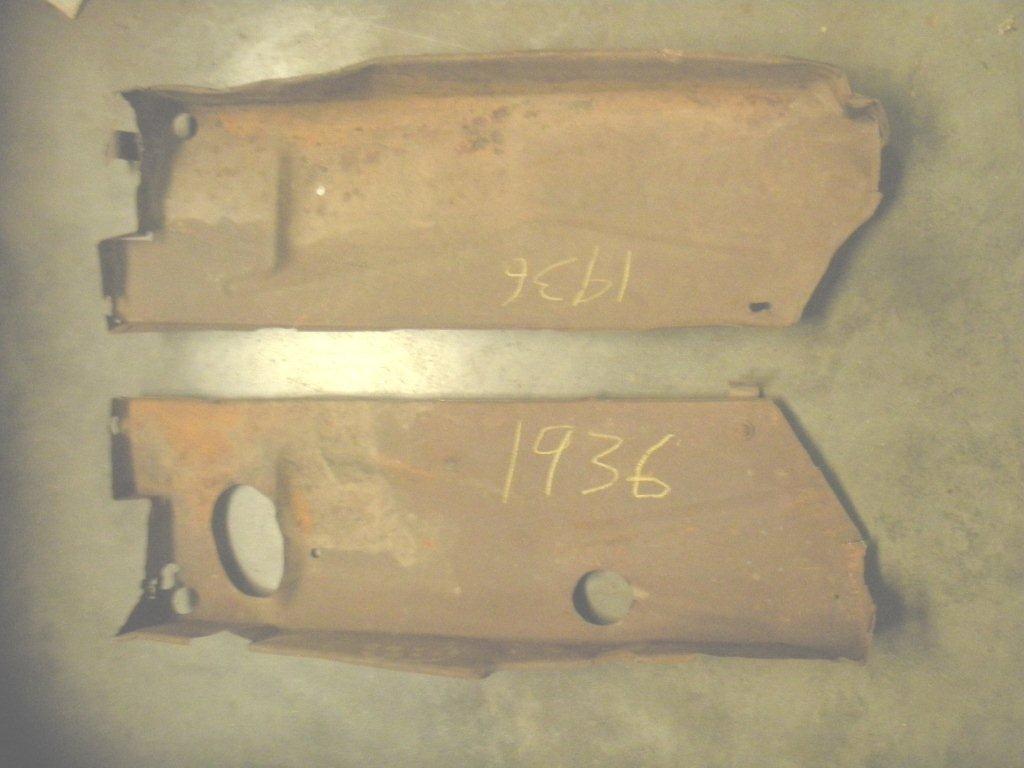
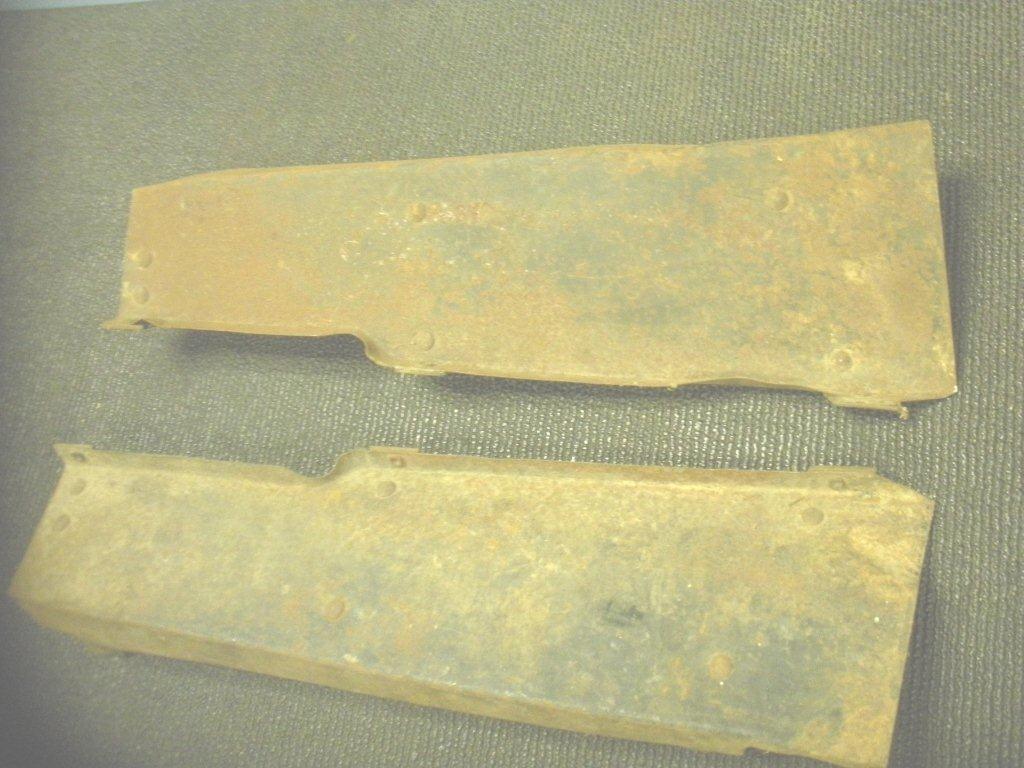
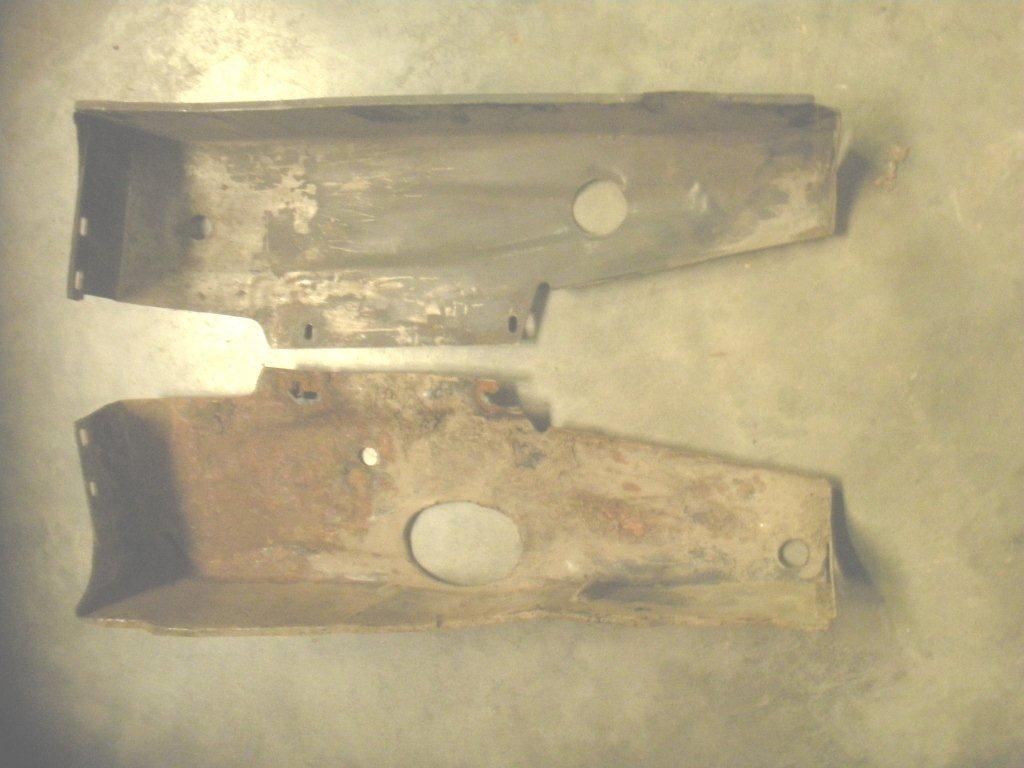
To protect engine components from a constant attack of dirt, GM designed metal stamped panels that attached to an area where the engine block and oil pan connect. This slowed dust from collecting on moving parts and for certain around the engine air breather.
Why don’t we see these pans still in place when today’s engines are seen? NOTE: Most pans in the photo have about two holes. These allowed a place for the vertical exhaust pipe and draft tube on the other side of the engine to pass (all depends on the year of the engine).
By mechanics as well as owners at home doing repair, these pans caused much effort to correctly replace when the engine was removed, exhaust pipe was exchanged, etc.
So, where did they go? Most went to the trash rather than spend the extra time to fit them into place.
A thought: As the rear motor mounts would wear over the years, the engine would slightly flex under acceleration. It could then rub the dust pan hole. Probably caused noise or---.
If you have a pair for your 216 six cylinder, lucky you! Even the experienced show judge’s may ask: Why did you make these sheet metal filler panels?

Over the years, these gradually fell from their attaching fasteners and found their way to the roads. Potholes and ruts were often the culprits. The vehicle owners and even hired mechanics tended to remove them during maintenance. They were rarely paced back into position.
Today finding a pair of these engine dust pans is almost impossible. Newer generations have no knowledge of their existence. These photos of the different years should be about 1936 and 1946.
If someone is in disagreement on the years, email us at info@jimcartertruckparts.com