





During the early years, most roads were not paved and the quality of tires was far from that of today. Thus, tire repair was very big business. It was necessary for vehicle manufacturers to provide the easiest access to the often needed spare tire. Part of driving a car or truck was knowing how to change a tire.
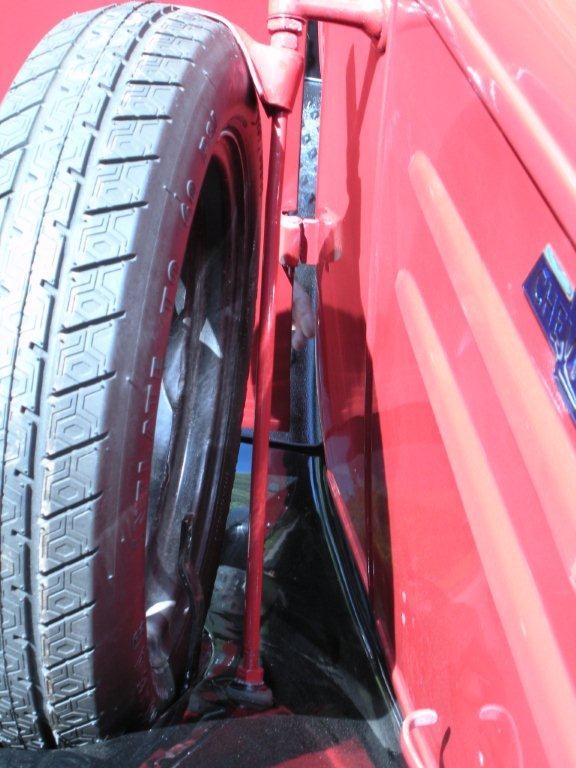
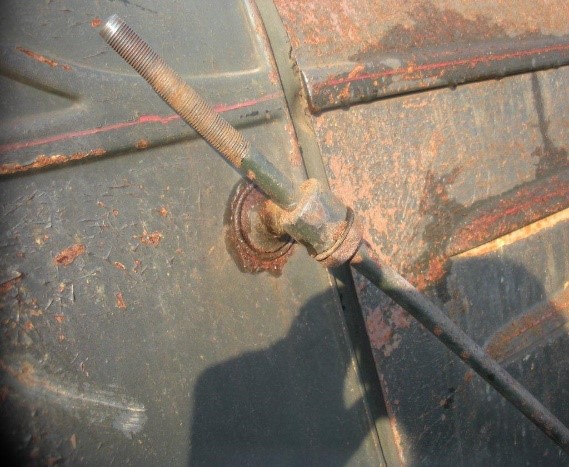
On the 1936 and older pickups, the tire storage space was limited. GM chose to place a dip in the front fender and a 29" vertical rod from the frame rail to the cowl for the tire and wheel support clamp. A long nut is threaded to the top of the rod and tightens a curved metal over the tire. No, the pickup did not use the chrome "T" handle on the car.
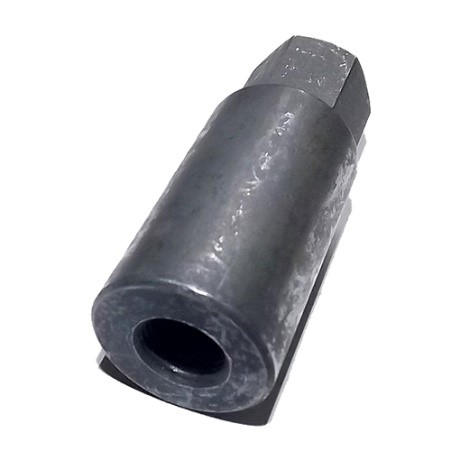
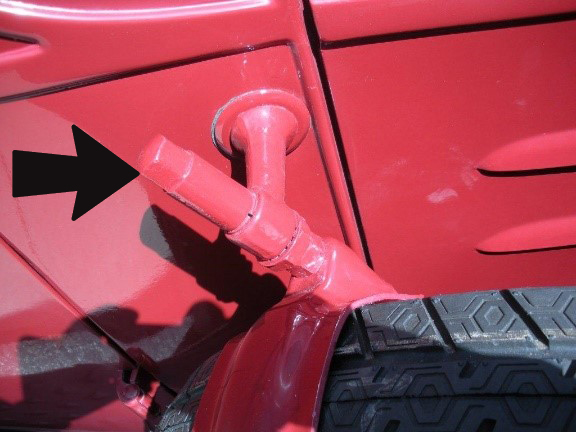
In viewing restored ½ ton pickups at shows it is amazing that most use the chrome die-cast “T” handle that came new on passenger cars. Not correct! The pickup uses a hexagon securing nut. It is designed to be turned by the lug nut tire tool usually stored under the seat cushion. It is assumed the long nut helped lower the price during the Great Depression.
Why the difference is unknown. We assume the “T” handle nut is more convenience to turn. The car driver would get less dirt or grease on clothes or hands during a tire change, plus the car was usually on smoother roads, not on the rough surfaces of a farm field or back roads that might loosen the securing nut.
A few replacement hard parts for most of this side mount system have been reproduced. Originals usually must be restored. The rubber grommet that protects the cowl and fender metal from the side mount hardware the securing nut and 29" support rod are available. Only Jim Carter Truck Parts would “step up to the plate” and have these very slow moving parts reproduced!!
INTERESTING: The Chevrolet 1/2 ton (1934-1936) placed the support well in the right front fender. The 1936 GMC (first year for their 1/2 ton) it was in the left front fender. The support hardware is the same. Just another way of the two marquis showing their individuality with limited expense.