




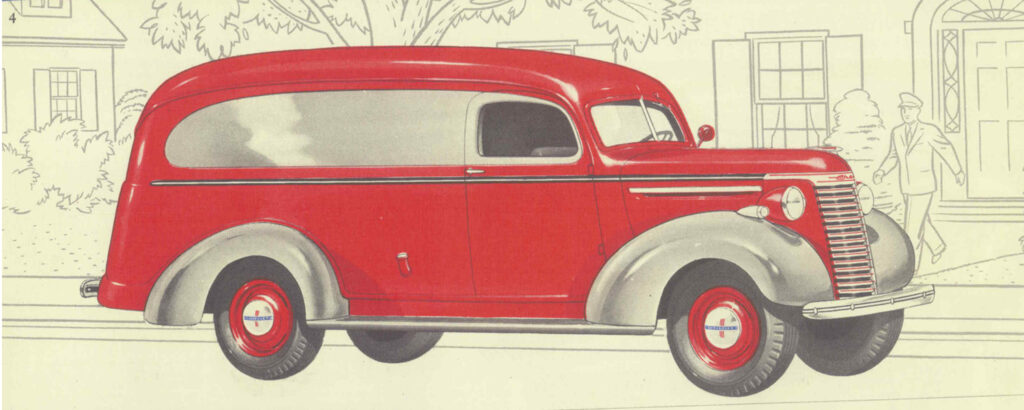
These commercial vehicles (the Panel Truck and Canopy Express) were designed by GM for local delivery purposes. They usually came with a seat for one delivery driver. A second passenger was not needed so the company that bought the new vehicle saved the cost of a passenger seat. Yes, the passenger seat on the panel truck was a factory option.
On the Panel Truck, this gave even more room for carrying longer merchandise such as lumber and all was carried out with bad weather.
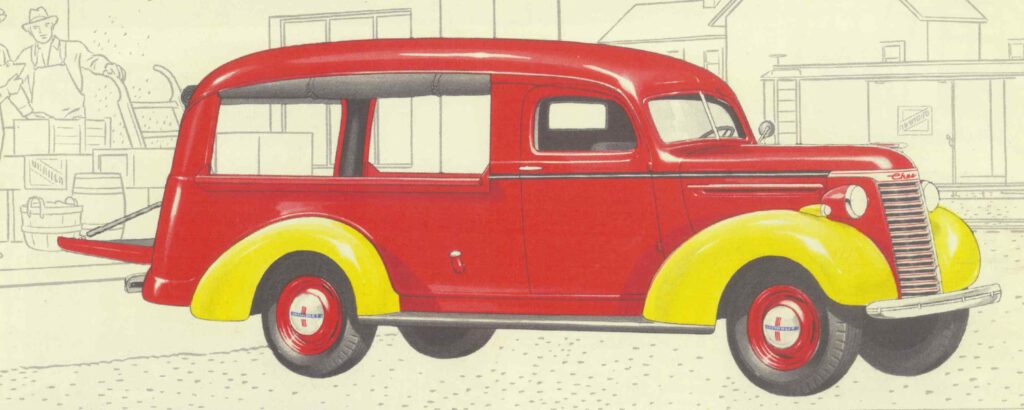
The Canopy Express had a full wood panel behind the driver to keep him out of the cold (if it had an accessory heater). Thus, a little less hauling capacity unless smaller items were placed through the open door where a seat might have been.
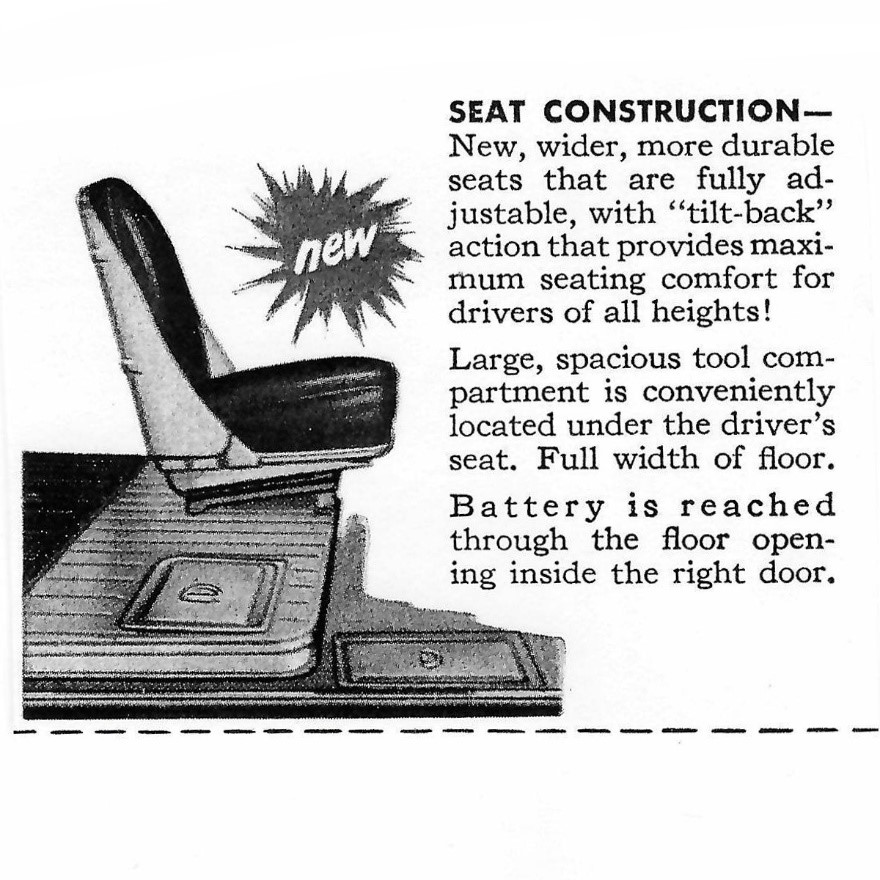
“Fully adjustable” may relate only to comfort?
This GM ad states no evidence that the seat is locked in place for safety. Thus on a panel truck there is nothing to keep heavy merchandise from sliding forward during an emergency stop and pressing the driver against the steering wheel. If there was, GM forgot to say this existed. Strange!
New Addition to the one-seated trucks above
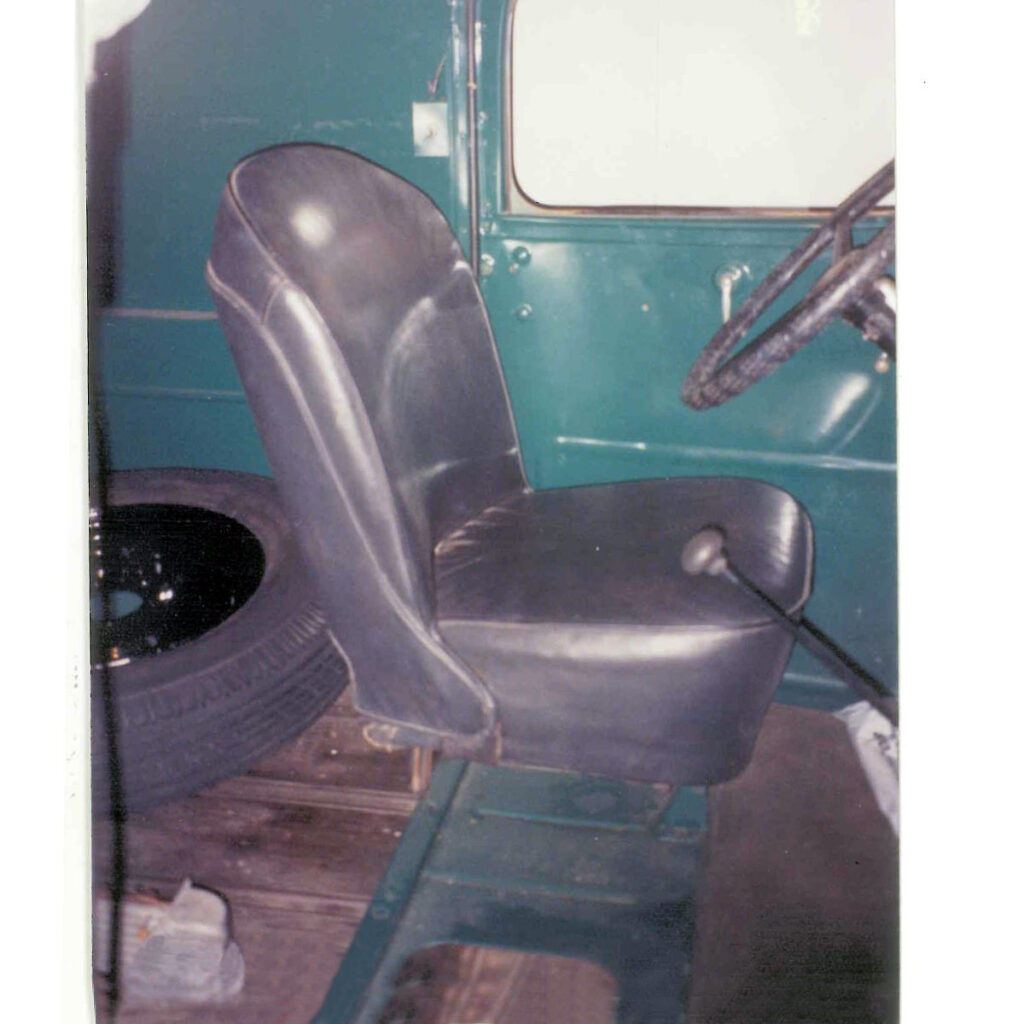
We were recently looking through some of our oldest company data. We found some very appropriate photos taken in 1995 of an original seat still in a 1940-46 Chevy/GMC seat. Great seeing this seat above just as it was 79 years ago!
Back in the late 1940’s when safety was not the issue as today, this seat appears to lack something we would not forget in today’s world. (This is not so dangerous on the Canopy Express because a plywood panel is behind the driver.) It is particularly bad on the panel truck as the driver is not protected from merchandise sliding forward on an emergency stop such as boxes, lumber, plumbing pipes, etc. When this happens the driver will find himself crushed between the items pushing the seat back forward to the steering wheel and column. What does that do to the driver’s rib cage?
Yes, it seems GM would have provided a latch to keep this from happening – or did they?