






Thought this might be of interest to owners with these two rare body designs. We discovered that both have the “same” left side tail light bracket and light. (For the Suburban that has a tail gate.)
However, the two body designs have their brackets in different locations. See photo below.
There should be no surprise when original GM replacement parts are sold out, they usually do not make another run. Demand might be low and sometimes less expensive aftermarket replacements are too competitive. This has occurred on the above.
There was limited production of the above two vehicles (less than3 years) because of almost no US vehicle production during the WWII years.
GM still had a supply for dealer purchase nine years later. See attached page below from an April 1950 Salesman Data Book publication. (Tells dealers what parts are available they can buy.) Page 100 from this data book shows them at 45 cents in 1950.
Three factory body holes show the correct placement of the bracket; ½” for the wiring loom plus two small holes to secure it to the body.
IMPORTANT: There are no bracket holes on the right side on either body style. Thus, no right tail light was offered.
NOTE: The following photos show this bracket at two different height locations.
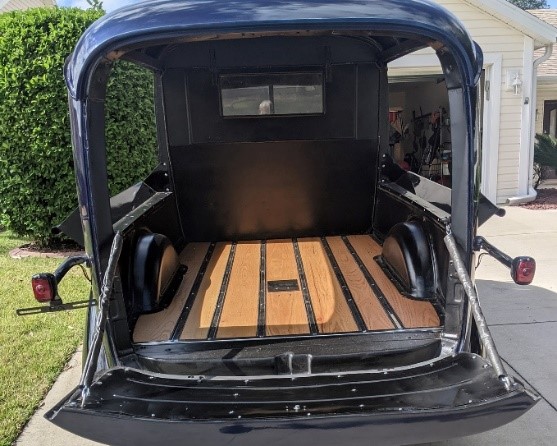
1940 Canopy Express has a “real” 80 year old bracket. Owner Dennis Hall of Waterford, Wisconsin matched it on the right side for turn signal and stop light. The license below bracket is much higher than Suburban’s.
High Bracket with Lower License Plate
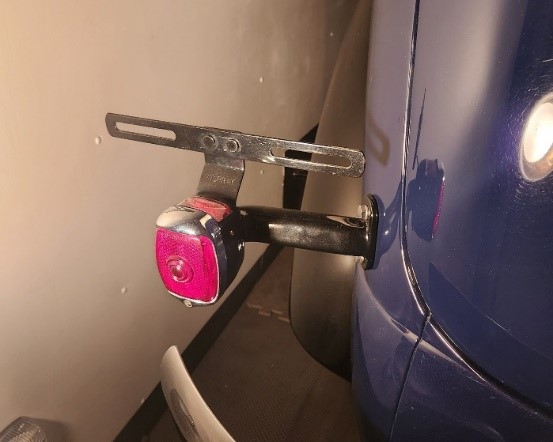
Jerry Prodoehl of New Windsor, Maryland hand-made his bracket from the body to the tail light. As a perfectionist he tried so hard to find a real left example for his Early 1947 Suburban. Finally gave up and made one from old photos. Looks great! Chevrolet used a high license plate bracket so it does not touch the bumper.
Low Position with Upper License Plate
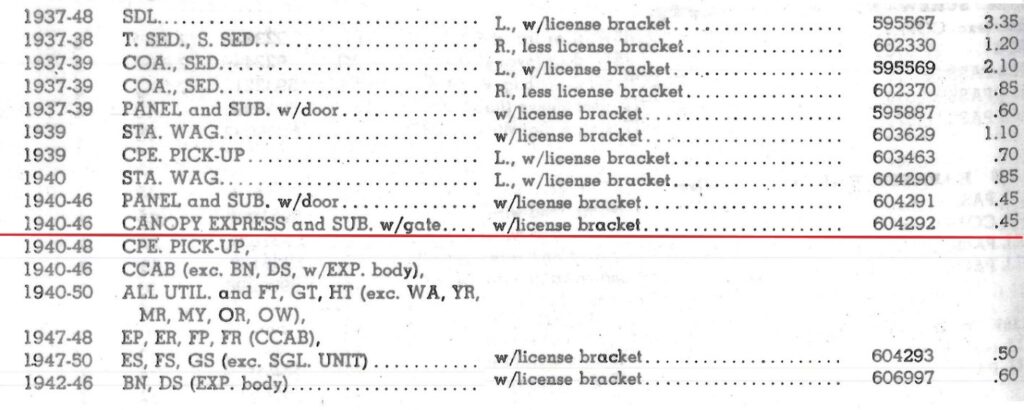
Above Salesman Data Book – April 1950 – Page 100
Dennis Hall, mentioned above, has created this model of his taillight bracket. The hope is for us to make a mold so metal reproductions can be available. This will save future restorers many hours on usually an unsuccessful hunt:
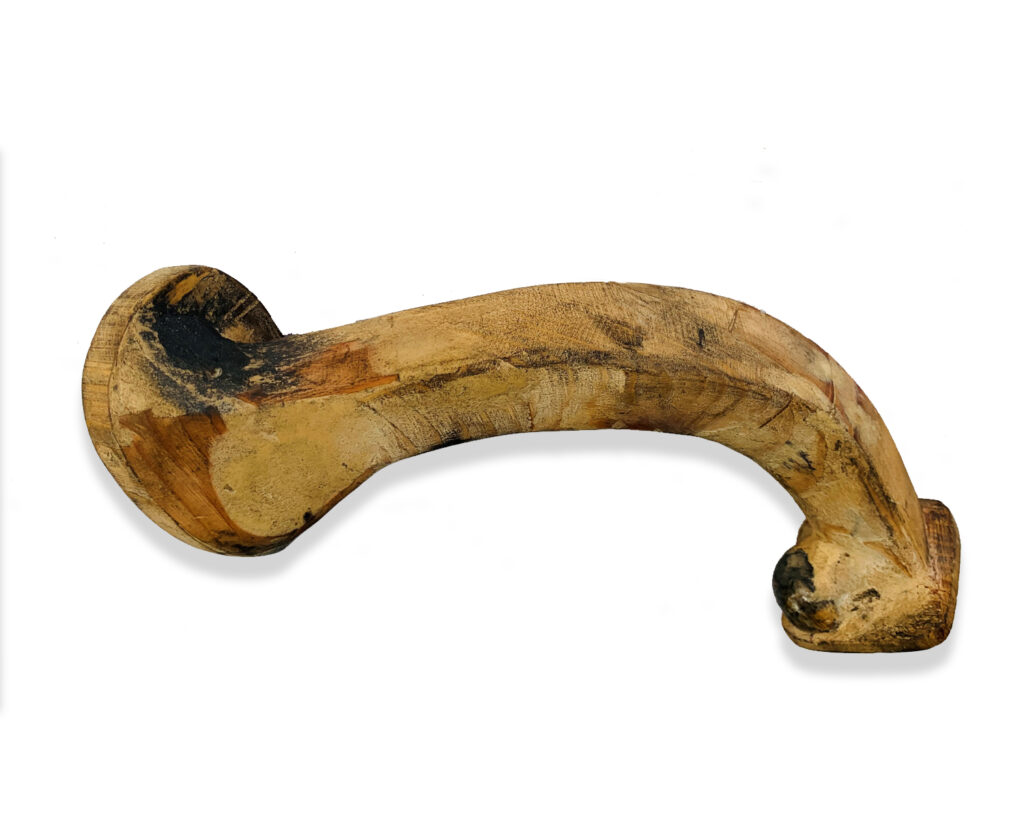
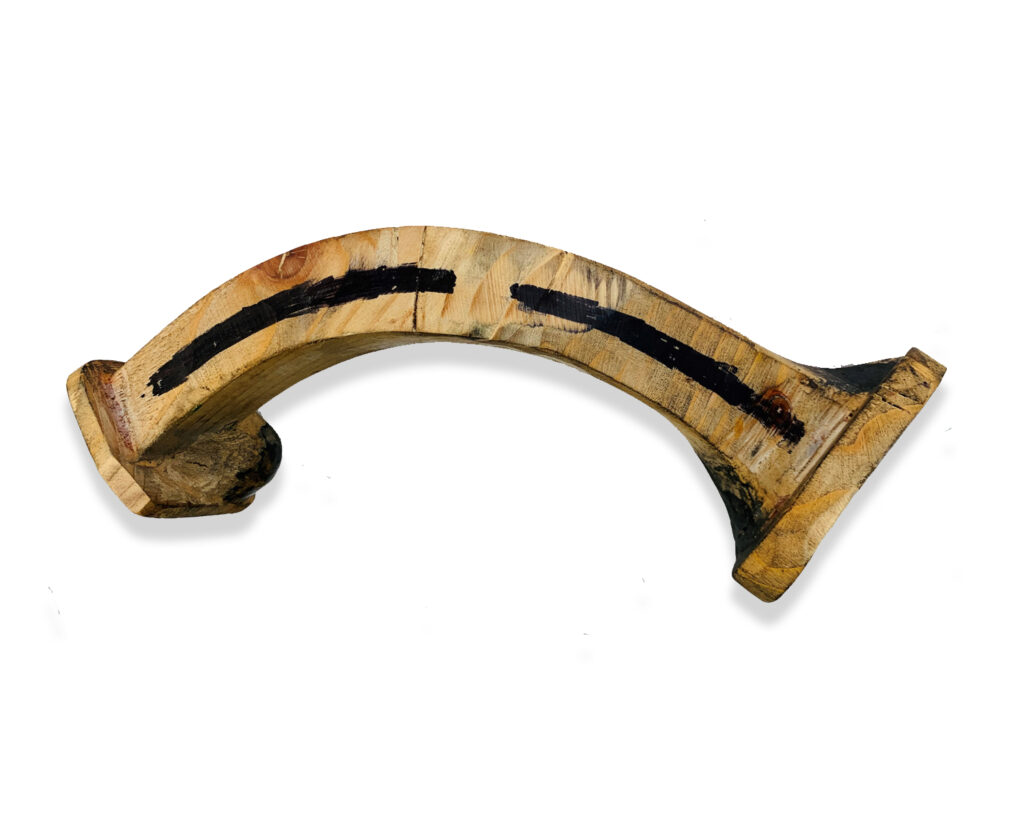
Top and Bottom View
(The two black lines will be cut to make a place for the wiring.)