





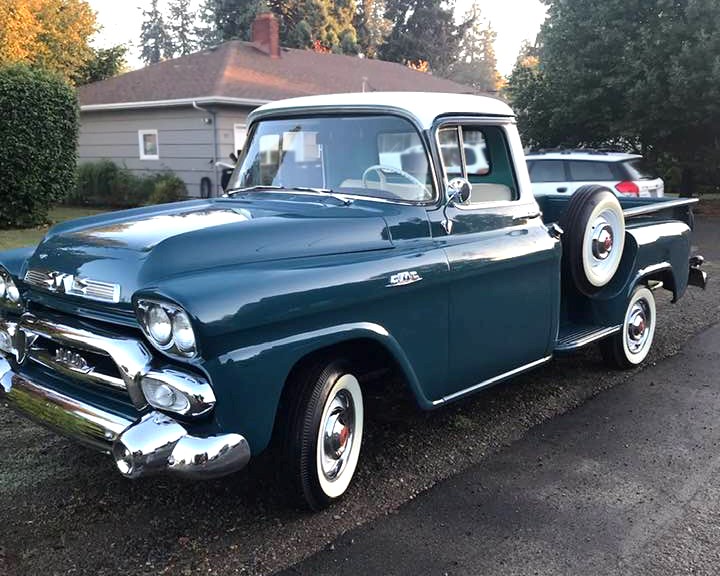
Such a rare GMC long 8’ bed ½ ton! You can attend truck/car events over a lifetime and never see the design of this 70-year-old GMC.
The owner is Pete Bogardus from Eugene, Oregon. He comes from a family of GMC owners. There was rarely a time that they didn’t own a pickup, and always a GMC. Pete even remembers at age 7 when his parents bought a new GMC Suburban.It was just right for a family, plus small storage spaces are behind the back seat for miscellaneous things they might need. They chose not to own a car.
Pete currently owns two GMCs, both bought in California. A 1959 1 ton with dual rear wheels and a hydraulic tilt-up bed was used in his work responsibilities.
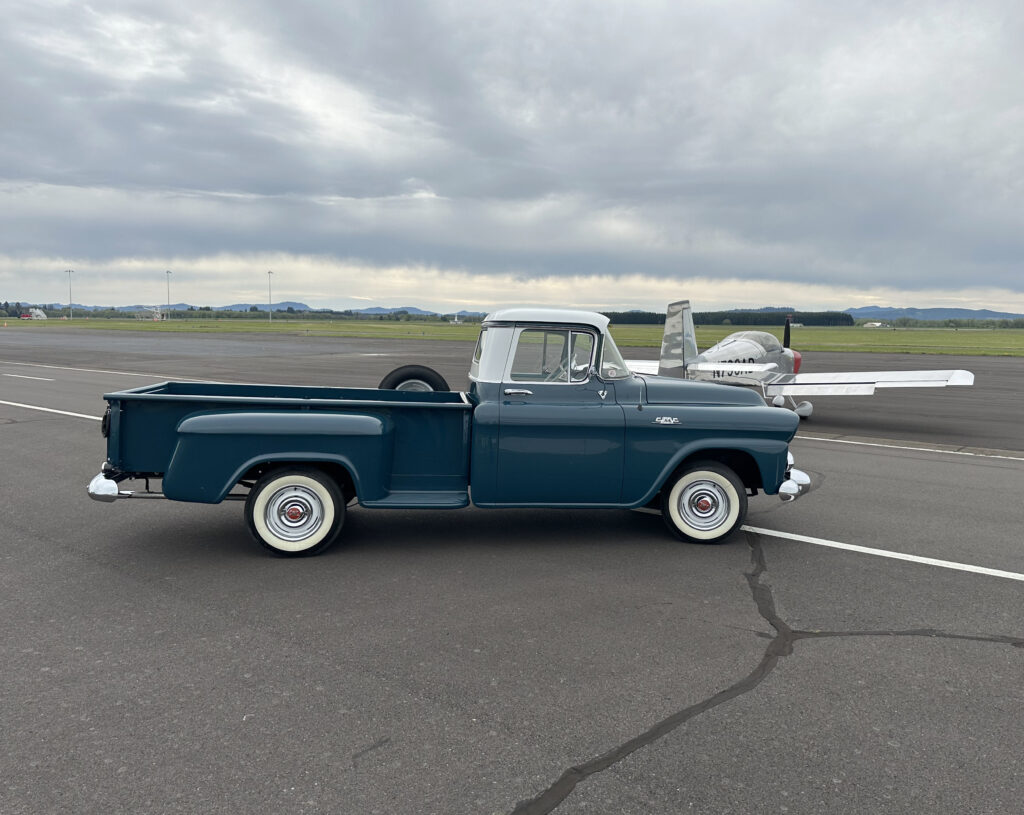
Our feature truck is Pete’s 1958 ½-ton long-bed step side. He bought it last year after a long, long hunt for a show-quality GMC of that year. When he saw the advertisement on Facebook Marketplace, it was “love at first sight”. There was no debating the price. He did not want to lose it. Look at the photos and see why!
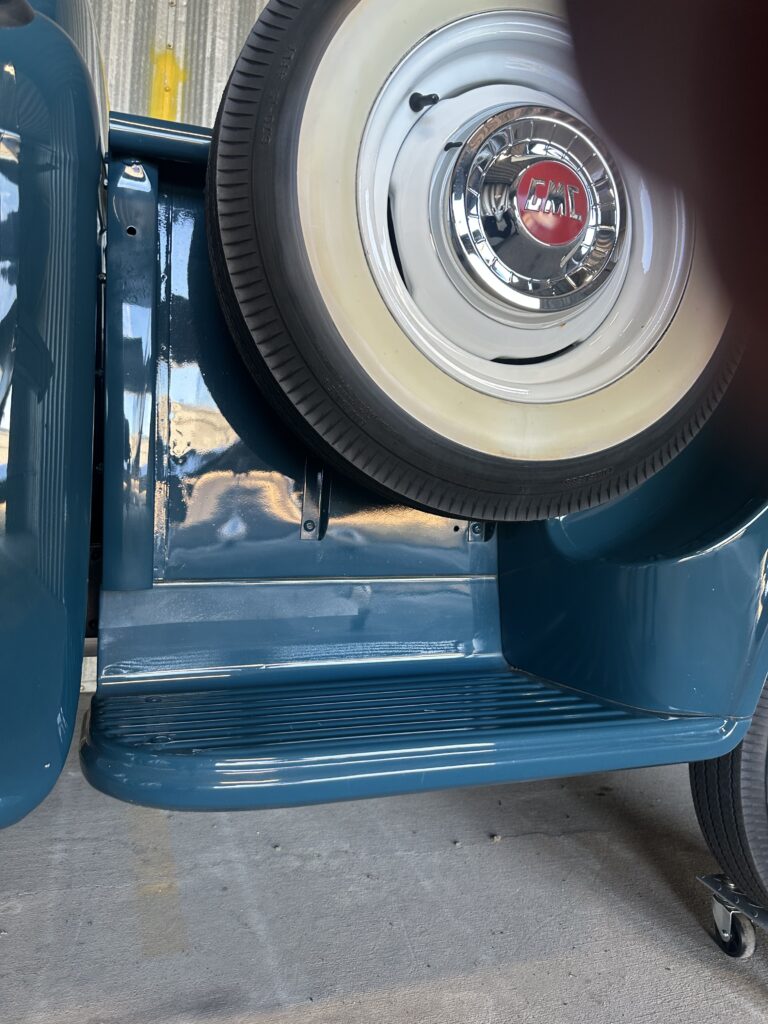
Some details: It has a pure GMC 270 cubic-inch inline-six-cylinder engine with a factory-installed 4-speed floor-shift transmission. Correct 6-bolt wheels with small chrome GMC hubcaps, held in place with spring clips and riveted to the wheels. As an attractive filler between the hubcaps and the wheel edge are chrome beauty rings. A great extra is the White wall tires!
One very rare item Pete wanted was an 8-foot-long step-bed. This is very basic, as originally most GMC buyers paid a little more and ordered a Fleetside.
The side-mount spare tire with an indented left rear fender (without being under the bed) was just another eye catcher that told Pete he had to have this rare GMC. Yes, of course, it has the famous logo stamped on the tailgate, so following traffic has no doubt who is ahead of them!
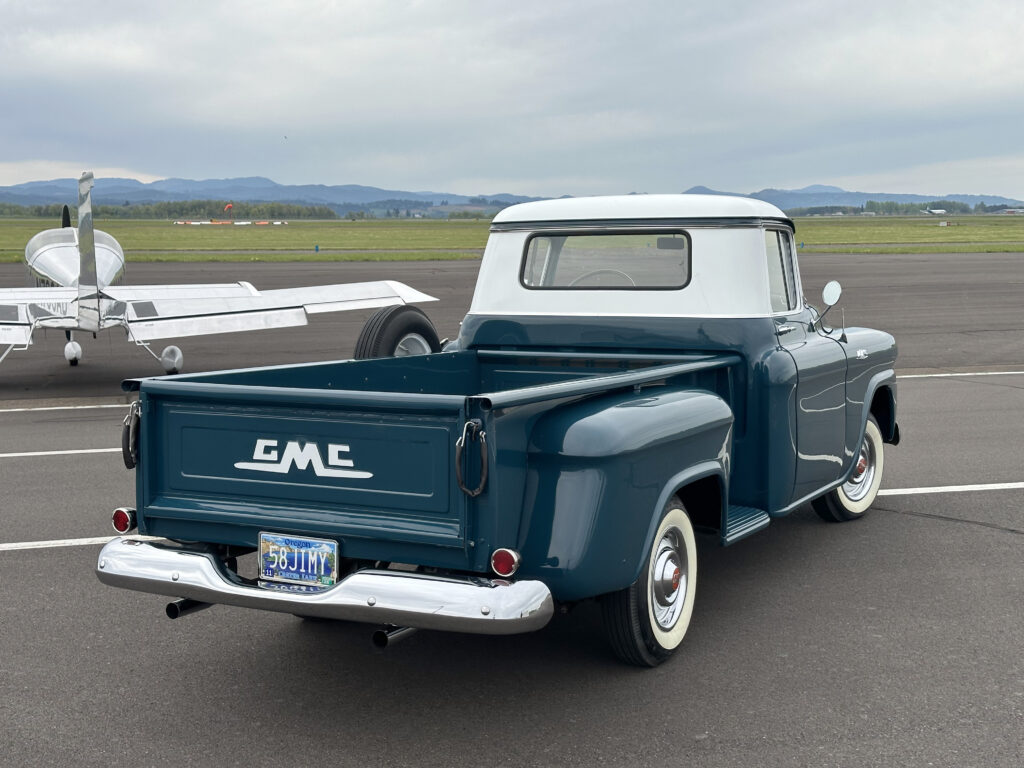
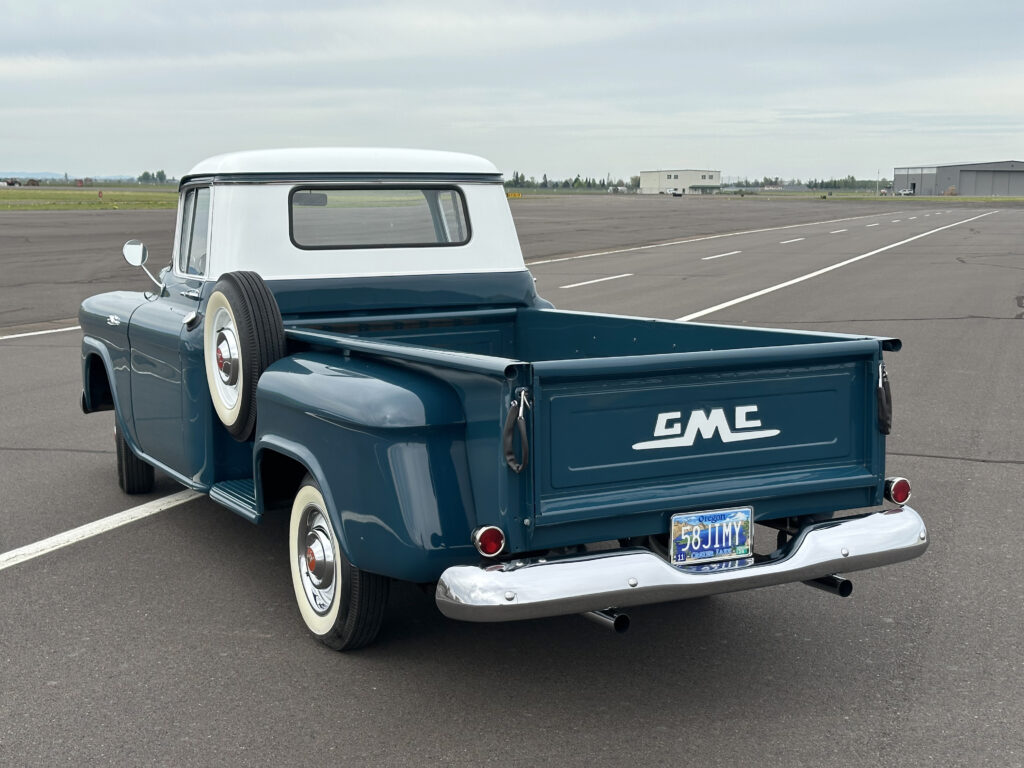
Look at Pete’s personalized license plate. Now that is real ingenuity!
GMC Extra:
You have just been reading about Pete’s Feature Truck of the Month! Thus, we thought you might have an interest in why the once GMC “big truck only” supplier decided to produce small domestic pickups. Here it is!
Why the GM Pickups with the GMC Logo Exist Today!
Prior to 1936, the GMC name represented the General Motors Corporation. It was reserved for only their line of large commercial trucks. They had their own Big Truck dealerships and very rarely mixed with other GM-made cars and trucks.
The Great Depression of the 1930’s changed the automotive market forever! Sales of cars as well as large trucks had dropped to very low levels. The fraction of original dealers that had survived was also trying to sell more used cars, doing repairs on all vehicles, and even farm equipment.
Over half of automotive stand-alone names ceased production and never reopened. The remaining GMC dealers were crying to General Motors to do something to save them from bankruptcy
This is what GM did to save its Big Truck line! It is why we still have the GMC small trucks today.
General Motors knew getting more Big Truck sales was not likely during hard times. That was already the problem! However, offering a less expensive small truck with more than just GMC logos might just turn the tide.
There was no time to wait! Without a doubt, many night hours for management and designers were spent to create a much lower cost pickup to appear to individuals.
It could not be a Chevrolet that moved over to a GMC dealership. This would be an insult to Chevrolet dealers, and it would not increase GM’s overall purchases. The sales volume would then be the same, but from two divisions. The Chevrolet Division would never get over having this done to them!
Because time was so important, it was decided to use the Chevy pickup cab and bed, but not the name or their six-cylinder, low oil pressure engine. Other differences were a redesigned grille (a major focal point), different color options, changed chrome hubcaps to a GMC logo, front and rear bumper, etc.
All was a go except for one BIG problem. GMC had no smaller engine! They were “Big Truck” people, and their existing engines would not fit in a “Chevrolet” pickup chassis, which they were going to partially use!
What now? The decision was made to start (in 1936) with an existing engine from the Oldsmobile. This was a flat head (the values were in the block close to the 6 pistons). With almost no moving parts in the cast-iron head, it was about 2.5” high.
This was repeated in 1937. However, the 1938 engine of choice was changed to the Pontiac. (It appears this was less costly.) There was no secret, as the large Pontiac Indianhead logo was still on the side of the engine block.
Finally, after a three-year wait for a totally new, smaller GMC engine became available in 1939 for their new pickup truck. It was a more traditional inline six cylinder with overhead valves in the head. This was very successful and continued through 1959. As the trucks got larger, the piston diameter was increased to get more horsepower.
More on How Now Marketed