Yes! The Rumor is True! Jim Carter Truck Parts is beginning our 46th Year!
Few if any have reached this milestone.
Jim Carter here, we are just as active in GM trucks as ever!
Click on a year below. See what a near 1/2 century can do for you!
THIS IS US! JIM CARTER TRUCK PARTS AT 45 YEARS
Thank you, thank you, for so many great customers like you that have helped our company reach
our 45th Anniversary. We are so proud to have reached this milestone. This is Jim Carter, I am
still very active as when I started restoring my first pickup, a 1950 Chevy 1/2 ton and needed parts! It now
sits in our Lobby!
Just a Few Extras:
- 17 employees with 130 combined year's expertice.
- Over one million parts in two buildings plus our very own nearby wood shop.
- Partisipated in numerous Swap Meets accross the country over the years.
- House so many more "USED" GM parts than any of our competitors.
- We supply parts to over 20 active nationwide Dealers and 2 in Canada.
- Helped with founding of All American Truck Club of New Zealand.
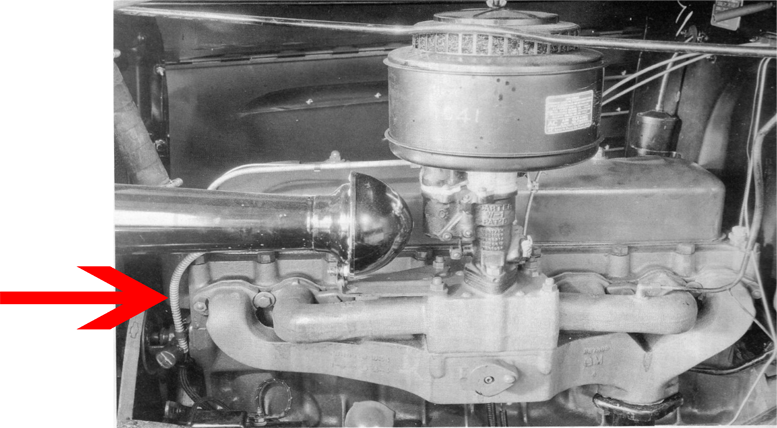
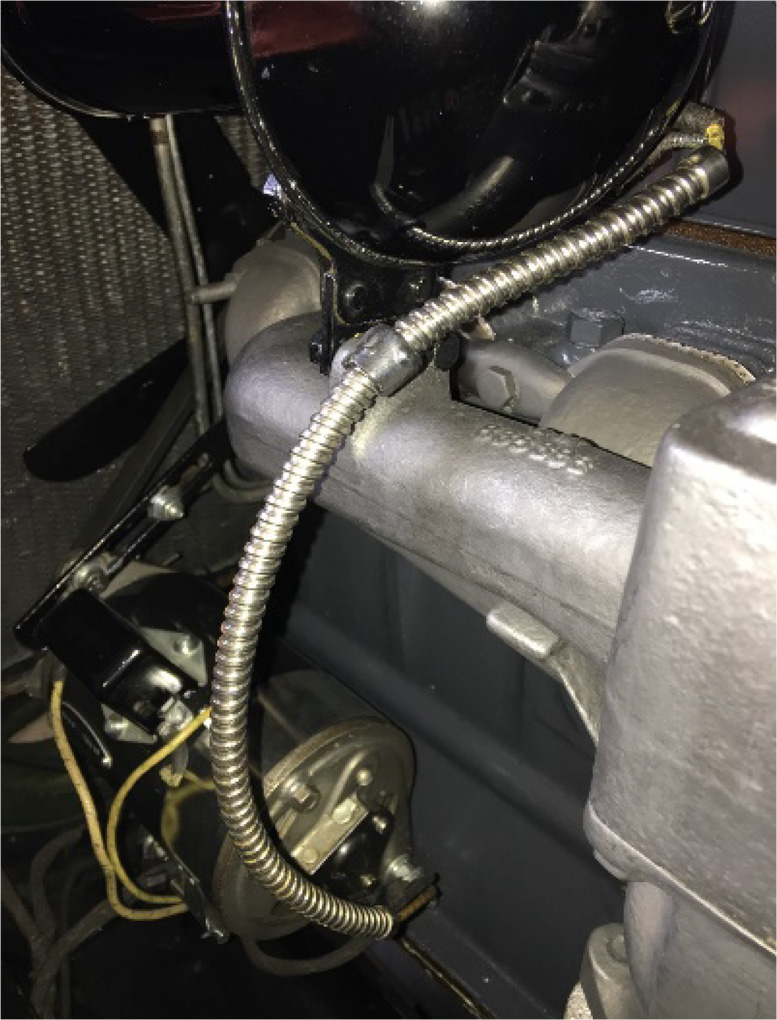
There are two electric wires to the intake manifold mounted horn in the mid-1930's. They are protected by a zinc plated conduit between the two horn contacts and where they connect to the main wiring harness beside the six cylinder Chevy engine.
207 Engine
1934-36
The 1936 and earlier 207 engine manifold does not have a connection for the conduct from the horn. Therefore, it leaves the horn and runs beside the engine valve cover forward and down to the main wiring harness. A clip stabilizes the conduit by using a bolt on the water pump.
216 Engine
1937-38
The first two years of the 216 engine [1937-38], this conduit also extends between the horn and wiring harness. It lays over the intake and then vertically down to the main wiring harness. A clip now secures the conduit to the new manifold horn extension bracket. IMPORTANT NOTE: If it seems confusing, these photos should make it much easier to understand. In summary, the two different ways the horn mounts to the intake manifold results in the 7/16th conduit protecting the two wires from accidental damage over the years.